Spring Flowers

Spring Flowers
For Sale

Monday, August 09, 2010

The Fusca Revival

Just the FACTS

In Brazil, the beetle is called "Fusca".

  • Brazilian production started in 1953, with parts imported from Germany.   By1959, the cars were 100% made in Brazil.  The car was made until 1986.  In 1993 production started again but only continued till 1996. 

  • The Brazilian version retained the 1958-1964 body style (Europe and USA version) with the thick door pillars and small quarter glass. 

  • Around 1973, Brazilian Beetles were updated with the 1968+ sheet metal, bumpers, and 4-lug rims; although the 5-stud rims and "bug-eyed" headlights were produced as late as 1972 (the base VW 1200 was similar to the 1964 European/USA 1200). 
  • The Brazilian VW Bug have four different sized engines: 1200 cc, 1300 cc, 1500 cc, and, finally, 1600 cc.
  • In Brazil the VW Bug never received electronic fuel injection (the air-cooled flat four engine from the Beetle received this, but to equip solely the VW Kombi later models), but, instead, retained single or double-single carburetion throughout its entire life, although the carburetion specs differs from engines of different years and specs.
  • The production of the air-cooled engine finally ended in 2006, after more than 60 years. It was last used in the Brazilian version of the VW Bus, called the "Kombi", and was replaced by a 1.4 L water-cooled engine with a front-mounted cooling system.

Fusca/Bug/Beetle/Kafer; call them what you will, the very last Fusca rolled off the assembly line in the Sao Paulo factory on 25 June 1996, bringing to an end a Brazilian production run of over 3 million VW Fuscas.  (Wikipedia)

Saturday, August 07, 2010

A Small bit of information

On Thursday of this last week I wrote a short post about the Brasilian coffee plantations.  I could have written more but I just wanted to set a scene for the photos not tell the whole history.  There are books and articles and other blogs that tell plenty.
You need this extra bit of information though: I have added a couple links to the original post to clarify the area and the farms we visited.

Thursday, August 05, 2010

FSO – Smells of Brasil

DSC_1547When in Friburgo I live in a forest.  This is not the forest of Germany or of the Northern USA – when you walk there you smell the pines, pine needles on the ground or the smell of whet leaves on the floor of the forest.
Here the forest smells of vegetation, whet vegetation, often rotting vegetation.  The smell of mold, mildews and fungus is dominant even in our garden.  Outside our fence with the years of buildup from the forest trees and plants the smell of vegetation tells me the life cycle of a sub tropical forest.
Today it has been foggy all day, no rain just whet and it is easy to smell the humidity as it saturates the ground, the trees, the stones.  There is a constant turnover of flowers, leaves, seeds (pine nuts) out in the garden.  Inside the fence this is kept swept and the ground clean, but there is still signs of the constant moisture.  Among all of these smell, on the breeze will come the smell of a lone flower – light and lemony – even the bees can’t resist.

These photos have been taken only during this winter, this dry season. 

SAM_0969 DSC_4697 DSC_4691
SAM_0959 DSC_0805 DSC_0888 DSC_0887 DSC_4554   DSC_4216 DSC_0056
you got lucky I almost did this post about the smell in the supermarket’s dried meat and fish department.
DSC00189
Yep on the right is pigs feet!  YUCK!

The coffee Plantations of Colonial Brasil

If you have been following me for any length of time, you’ve read my post about traveling in Minas that I wrote last year.  Last weekend Camillo and I took a tour to see a local coffee plantation in the State of Rio de Janeiro.  This is the second or third coffee plantation that we have visited and I wanted to tie my prior posts to this one – so as to not have to recreate the wheel.
RoseMary and Abel I can’t believe how the time goes by, it seems that I have not written about a visit to Ouro Preto nor about the coffee plantations that we visited mid 2006 with RioRose and the Commandant before they left Brasil, and before I joined Rosemary on her blog in early 2007.
I have a lot of catching up to do.
The coffee plantations, of the 17 and 1800s, are tied, woven, knitted tightly into the history of colonial Brasil and the slave trade that thrived here both legally and illegally until the late 1800s.  These vast plantations are now known for their shoddy land management practices; using up the soil with the continuous planting of coffee like was often done in the southern USA with cotton; planting vertically up the hills because it was easier and causing erosion and, most of all, they are known for the large scale clearing of forest all along the eastern seaboard of Brasil. 

The royalty of Portugal gave the land and titles away (well that’s what was said but I suspect if you had money you could have a title and the piece of land.)  After the freeing of the slaves, and the crash of the coffee market around the world these plantations were left to decay.  Now, in the past 25 years or so, they have been sold and some have been recovered; becoming Pousadas, restaurants, tour destinations, small museums documenting this important part of Brazil's cultural heritage.

That really wasn’t a tangent but necessary to set the stage for the photos I am going to show you.  The first group is of the two plantations we visited in 2006, and are in The State of Minas Gerais.  It is easy to see how well the coffee ‘barons’ lived in comparison to the slaves that made them rich. 
DSC00756 DSC00771 DSC00798 
I learned this weekend that this avenue of
imperial palms (that also grace the Botanical Gardens in Rio) declared that his home and plantation were owned by a ‘Barão’.  When the Portuguese King here in Brasil (which is an interesting story in itself) awarded the land and the title, he would give the new Baron a few seeds for the imperial palm.  Through time the slaves stole the seeds lying around on the ground and planted them in their own gardens, and they have now become a common sight in the towns surrounding these plantations.  If we went into this first house I don’t remember it – maybe we weren’t allowed to take photos – HUM, I should carry a notebook to write down these details that I forget so easily if no captured on the camera.
DSC00855DSC00861  DSC00869
When we went to the
second estate, the house had been restored inside as well as out.  There was a sign that said ‘please’ no photos because this was a private home, DSC00892

but Camillo spoke with the Italian owner…. he is quite charming you know…. and told her I was interested in the architectural features and she said okay take photos but make sure there was someone I knew in each one…. so meet Marissa my granddaughter who was 10 at the time


DSC00870 Now that I look at the photos again, I can see that these three plantations are very different in what they offer visitors. 

The first one focused on the gardens, the second the interior of the house and the third, that we visited just this weekend, was more about the history of Brasil, its music, and its slaves.   [Pousada Fazenda Ponte Alta, Av. Silas Pereira da   Mota, 880, Parque Santana, Barra do Piraí, R J ]                                        (Fazenda is a farm – so this B & B is of the High Point Farm). 
DSC_4907 DSC_4905 DSC_4911 DSC_4857
 DSC_4883 DSC_4882
SAM_1136 DSC_4912 DSC_4869 DSC_4853 DSC_4849
 DSC_4827 DSC_4807 DSC_4802DSC_4811
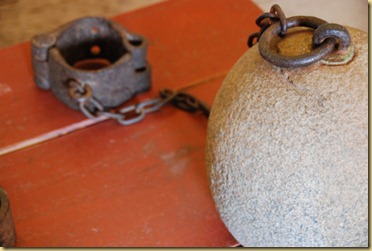
The last two photos above are of the slaves quarters, large rooms about 20 ft x 20 ft., at the time there were no windows only large wooden doors, where families of slaves were locked in for the night. 
  DSC_4784

Thursday, July 29, 2010

In Memory of Barry


DSC09055 Blogger
 
 Barry said... “That was a surprisingly different powerful post, GingerV.  Sometimes a few carefully crafted words are better than a thousand pictures.”
What a complement.  Barry made this comment on my FSO post ‘Incongruous’ and I can remember the pride I felt that he would like how I wrote.  I like hearing from all of the FSO gang but to receive a comment from Barry was special, made my day.  I think of him as the master. 
  He used metaphor as a way of expressing his feelings, his fears, his joys as he made his way through life’s adventures. 
On July 29, 2009 soon after the cancer diagnosis, in his post ‘dreams of Lindsay’ , using metaphor, he talked of his fear of the future, fear of the pain and sickness he might have in his future, of the comfort he felt at home in front of the fire with Linda and his memories.  If we took the time to read carefully we knew exactly what he felt.  Barry wrote,
Lightning flashes and rain begins to thunder against the roof. Lindsay comes scampering out of the dark of the back office, slows to a halt at the reassuring sight of Barry and Linda in the living room, and then walks at a more dignified pace over to the fireplace.
What, me scared by a little lightning, she seems to say.
At the fireplace she begins to walk in circles, scratching periodically at the carpet. Round and round she goes scratching the carpet into a more comfortable nest, before she flops to the floor with a window rattling thump.
….A distant thunder roars and rumbles across the sky and the beat of the rain increases.
Lindsay closes her eyes and is asleep within seconds.
Barry watches her with amazement. She looks so comfortable. By now she has recognized an unfortunate change in her daily routine. No longer does Barry take her for runs, or even walks around the block. He is wrestling with a nauseating dizziness that has confined him to his chair and bed. A world swirling vertigo that shows no sign of let up or improvement.
So Lindsay has stopped reminding him that the time for her walk is overdue. She isn't happy about it, but she has come to accept it.
In her sleep, Lindsay has rolled over on her side and her legs and nose have begun to twitch. Barry notices her eyes moving rapidly back and forth. Lindsay is deep in a dream.
No longer before the fireplace, Lindsay runs the pathways of the meadow at the top of the Scarborough Bluffs. Everywhere she is enticed by fragrant scents that lead her off the path, deep into the bushes and tall grasses. Here the sun is always shining and a gentle winds ruffles the hair on her head and long floppy ears. She recalls her encounter with the coyote and the naked man, the grieving Hindi family and the fashion models. Her heart beats faster at the memories of running the beach at the bottom of the bluffs and watching a huge flock of seagulls take to the sky as she runs into the midst.
And then the telephone rings and Linda answers it. Lindsay reawakens to her place before the fire and the sound of the storm outside. She yawns and sighs and looks over at Barry, reading quietly in his chair.
Then closes her eyes once again and returns to sleep…..
******************************************************
Posted by Barry at 10:07 AM                   
 Managing to hold onto his humor, not giving in to whining about his losses, being strong in the face of great adversity, being strong for us his blog pals even as his body weakened, this is how I will remember Barry and will continue to feel honored that I was allowed to know him these last two, too brief years.